
N-acetylcysteine (NAC) as Brain Injury First Aid
NAC is well tolerated, even at very high doses.
NAC appears to be protective before brain injury (good for those who put their brains at risk).
After injury, NAC appears to improve outcomes for TBI survivors.
RESEARCH ROUNDUP:
1. NAC (200mg/kg) provided marked neuroprotection with up to 78% reduction of brain injury
Results
NAC (200mg/kg) provided marked neuroprotection with up to 78% reduction of brain injury in the pre+post-HI treatment group and 41% in the early (0 hour) post-HI treatment group, which was much more pronounced protection than another free radical scavenger, melatonin. Protection by NAC was associated with the following factors: (1) reduced isoprostane activation and nitrotyrosine formation; (2) increased levels of the antioxidants glutathione, thioredoxin-2, and (3) inhibition of caspase-3, calpain, and caspase-1 activation.
2. NAC (150 mg/kg/day) almost totally eliminated the extensive neuronal loss…
… NAC (150 mg/kg/day) almost totally eliminated the extensive neuronal loss found in controls both 2 weeks (no treatment 21% loss, NAC 3%, P=0.03) and 2 months after axotomy (no treatment 35% loss, NAC 3%, P=0.002). Glial cell death was reduced (mean number TUNEL positive cells 2 months after axotomy: no treatment 51/ganglion pair, NAC 16/ganglion pair), and mitochondrial architecture was preserved. The effects were less profound when a lower dose was examined (30 mg/kg/day), although significant neuroprotection still occurred. This provides evidence of the importance of mitochondrial dysregulation in axotomy-induced neuronal death in the peripheral nervous system, and suggests that NAC merits investigation in CNS trauma. NAC is already in widespread clinical use for applications outside the nervous system; it therefore has immediate clinical potential in the prevention of primary sensory neuronal death, and has therapeutic potential in other neuropathological systems.
3. … subjects receiving NAC within 24 hours of blast had an 86% chance of symptom resolution with no reported side effects
Methods
This study was a randomized double blind, placebo-controlled study that was conducted on active duty service members at a forward deployed field hospital in Iraq. All symptomatic U.S. service members who were exposed to significant ordnance blast and who met the criteria for mTBI were offered participation in the study and 81 individuals agreed to participate. Individuals underwent a baseline evaluation and then were randomly assigned to receive either N-acetyl cysteine (NAC) or placebo for seven days. Each subject was re-evaluated at 3 and 7 days. Outcome measures were the presence of the following sequelae of mTBI: dizziness, hearing loss, headache, memory loss, sleep disturbances, and neurocognitive dysfunction. The resolution of these symptoms seven days after the blast exposure was the main outcome measure in this study. Logistic regression on the outcome of ‘no day 7 symptoms’ indicated that NAC treatment was significantly better than placebo (OR = 3.6, p = 0.006). Secondary analysis revealed subjects receiving NAC within 24 hours of blast had an 86% chance of symptom resolution with no reported side effects versus 42% for those seen early who received placebo.Dosage
The 4 gram loading dose was witnessed and then bottles were name labeled and given to the subject’s corpsman, medic or a nurse (for subjects remaining at TQ). Beginning 18–24 hours after the loading dose, subjects were given 4 grams daily (in two divided doses of 2 gm morning and night) for 4 days. The dose was then reduced to 3 gm daily [in two divided doses of 1.5 gm morning and night]. Every dose was witnessed by a corpsman, medic, nurse, or doctor.Conclusion
This study, conducted in an active theatre of war, demonstrates that NAC, a safe pharmaceutical countermeasure, has beneficial effects on the severity and resolution of sequelae of blast induced mTBI.
Because NAC is very safe and effective,
I have created a supplement.
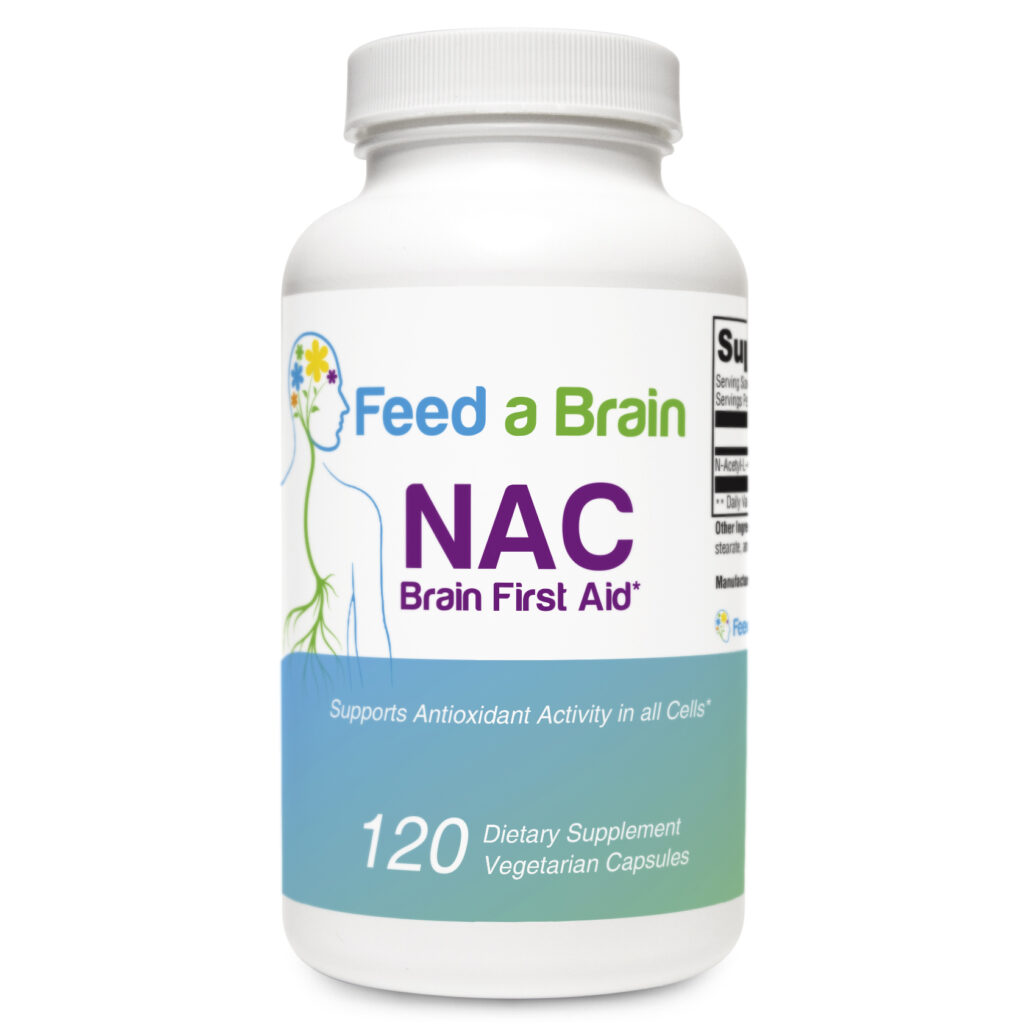
Brain First-Aid: NAC (N-Acetyl Cysteine) by Feed a Brain
More information about NAC, listen to my mentor in clinical nutrition:
